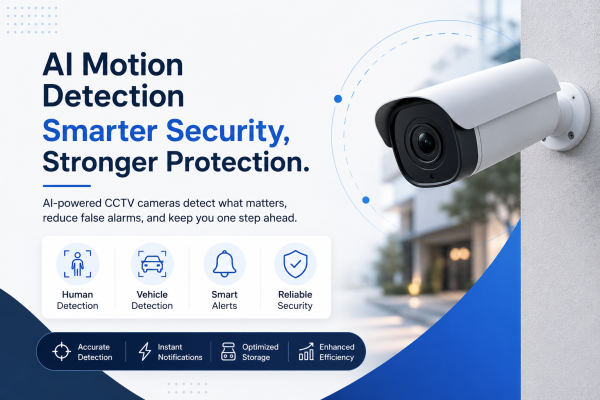
For years, CCTV cameras have played a vital role in protecting homes, offices, shops, and industrial properties. However, traditional surveillance systems often come with one major drawback—they record everything but understand nothing.
A branch moving in the wind, heavy rainfall, passing animals, or changing sunlight can all trigger unnecessary recordings and alerts. Reviewing these false alarms wastes time and makes it difficult to identify real security threats.
This is where AI Motion Detection is changing the surveillance industry.
Instead of simply recording movement, AI-powered CCTV cameras analyze what they see, identify important objects, and notify users only when genuine security events occur. This intelligent technology is making surveillance systems more reliable, efficient, and proactive than ever before.
In this guide, we'll explore how AI motion detection works, its key benefits, and why it's becoming an essential feature for modern security systems.
Understanding AI Motion Detection
AI Motion Detection is a smart surveillance technology that combines high-definition cameras with artificial intelligence algorithms. Rather than detecting every movement, the system analyzes live video footage and classifies objects in real time.
For example, the camera can determine whether the movement is caused by:
-
A person entering your property
-
A vehicle arriving
-
A pet crossing the driveway
-
Wind moving tree branches
-
Rain or insects passing in front of the lens
Because the system understands the difference between meaningful activity and harmless motion, it significantly reduces unnecessary notifications.
Why Traditional Motion Detection Is No Longer Enough
Older CCTV systems detect motion by comparing changes between video frames. If enough pixels change, the camera assumes something important has happened.
Unfortunately, this approach often creates problems.
Common causes of false alarms include:
-
Moving leaves
-
Shadows
-
Heavy rain
-
Flying insects
-
Headlights
-
Fog
-
Reflections
These unnecessary alerts quickly become frustrating, causing many users to ignore notifications altogether.
AI solves this problem by understanding what is moving—not just that something moved.
Key Features of AI Motion Detection
Human Detection
AI cameras recognize human shapes and movement patterns.
Instead of receiving alerts for every motion event, you'll only receive notifications when a person is detected.
This feature is especially valuable for:
-
Homes
-
Retail stores
-
Apartment buildings
-
Offices
-
Warehouses
Vehicle Recognition
Businesses often need to monitor vehicle activity rather than general movement.
AI cameras can distinguish:
-
Cars
-
Trucks
-
Motorcycles
-
Delivery vehicles
This makes parking areas, factory entrances, and commercial premises much easier to monitor.
Smart Event Filtering
Instead of generating hundreds of unnecessary recordings, AI filters out irrelevant activity.
Ignored events may include:
-
Rain
-
Tree movement
-
Animals
-
Shadows
-
Lighting changes
This results in cleaner recordings and fewer distractions.
Instant Mobile Notifications
When important activity occurs, AI cameras send real-time alerts directly to your smartphone.
Most modern systems allow you to:
-
View live video instantly
-
Play recorded clips
-
Save important footage
-
Share recordings when needed
Smart Search
Finding important footage is much faster with AI.
Instead of searching through hours of recordings, users can search by event type, such as:
-
Human detected
-
Vehicle detected
-
Motion detected
-
Intrusion event
This can reduce investigation time from hours to minutes.
Benefits for Different Businesses
Retail Shops
Shop owners benefit from AI surveillance by monitoring customer movement, protecting cash counters, and reducing shoplifting incidents.
AI cameras can also monitor entrances and stock rooms without creating unnecessary alerts.
Offices
Businesses use AI motion detection to secure reception areas, meeting rooms, restricted offices, and parking facilities.
Managers can receive instant notifications after working hours if unauthorized access is detected.
Warehouses
Warehouses contain valuable inventory and often operate around the clock.
AI surveillance helps monitor:
-
Loading docks
-
Inventory areas
-
Entry gates
-
Employee access points
This reduces theft and improves operational security.
Educational Institutions
Schools and colleges use AI surveillance to improve campus safety.
Important areas include:
-
School entrances
-
Corridors
-
Parking lots
-
Laboratories
-
Restricted rooms
Residential Communities
Apartment complexes and gated societies use AI cameras for:
-
Visitor monitoring
-
Vehicle tracking
-
Gate security
-
Common area surveillance
Residents receive better protection without constant false alerts.
Additional AI Features Found in Modern CCTV Systems
Today's smart surveillance cameras offer more than motion detection.
Many systems include:
-
Face Detection
-
Face Recognition
-
Smart Tracking
-
Line Crossing Detection
-
Intrusion Detection
-
Virtual Perimeter Protection
-
Crowd Detection
-
Object Removal Detection
-
Object Left Behind Detection
-
License Plate Recognition
-
Heat Mapping
-
People Counting
These technologies help businesses make better security decisions while improving operational efficiency.
Is AI Motion Detection Worth the Extra Cost?
Although AI-enabled CCTV cameras cost more than traditional models, they deliver much greater value over time.
Benefits include:
-
Better security
-
Reduced false alarms
-
Faster incident response
-
Lower storage usage
-
Improved monitoring efficiency
-
Better evidence collection
For businesses, these advantages often outweigh the initial investment.
Choosing the Right AI CCTV Camera
When comparing AI security cameras, look for features such as:
-
Human and vehicle detection
-
High-definition image quality
-
Color night vision
-
Mobile app support
-
Motion zones
-
Smart alerts
-
Local and cloud storage
-
Weather-resistant design (for outdoor use)
-
Reliable warranty and technical support
Choosing the right camera ensures long-term performance and dependable protection.
The Growing Role of AI in Security
Artificial intelligence is rapidly transforming the surveillance industry. Future CCTV systems are expected to provide predictive analytics, advanced behavioral recognition, smarter automation, improved facial recognition, and deeper integration with smart homes and business security platforms.
Instead of reacting after an incident occurs, AI-powered surveillance is moving toward identifying risks before they become security threats.
Conclusion
AI motion detection has become one of the most valuable advancements in modern CCTV technology. By recognizing people, vehicles, and suspicious activities while filtering out unnecessary movement, AI cameras deliver more accurate alerts, better security, and greater convenience.
Whether you're securing a home, retail store, office, warehouse, school, or industrial facility, upgrading to an AI-enabled CCTV system can improve protection and reduce the effort required to monitor your property.
As AI technology continues to evolve, smart surveillance will become the new standard for homes and businesses looking for reliable, intelligent, and future-ready security solutions.
Frequently Asked Questions
What is AI motion detection in CCTV?
AI motion detection uses artificial intelligence to identify important objects like people and vehicles while ignoring irrelevant movement such as rain, shadows, or animals.
Can AI CCTV cameras reduce false alarms?
Yes. AI significantly reduces false alerts by analyzing the type of object and movement before sending notifications.
Is AI motion detection useful for small businesses?
Absolutely. Retail shops, offices, restaurants, and clinics can all benefit from more accurate alerts and improved security.
Do AI CCTV cameras work at night?
Yes. Most AI cameras combine intelligent motion detection with infrared or color night vision to maintain reliable performance in low-light conditions.
Are AI CCTV cameras suitable for homes?
Yes. They help homeowners monitor entrances, driveways, and outdoor areas while reducing unnecessary alerts.