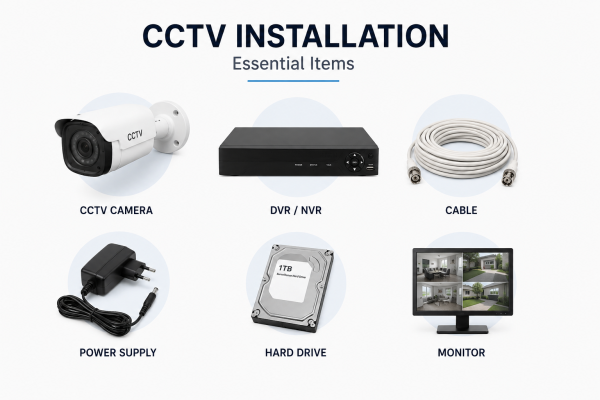
Installing a CCTV camera system is one of the most effective ways to improve security for homes, offices, shops, warehouses, and other properties. While many people focus on choosing the right camera, a successful CCTV installation depends on several other components and materials working together. Each item plays an important role in ensuring that the surveillance system functions reliably and delivers clear video footage.
In this blog, we'll explore the essential items and materials commonly used during CCTV camera installation.
1. CCTV Cameras
The camera is the heart of any surveillance system. Depending on the location and security requirements, different types of cameras may be used, including:
-
Dome Cameras
-
Bullet Cameras
-
PTZ (Pan-Tilt-Zoom) Cameras
-
Turret Cameras
-
Wireless Cameras
The choice of camera depends on factors such as indoor or outdoor use, night vision requirements, and the area that needs monitoring.
2. DVR or NVR
A Digital Video Recorder (DVR) or Network Video Recorder (NVR) is used to record and store video footage.
-
DVRs are typically used with analog cameras.
-
NVRs are designed for IP cameras and offer higher image quality.
These devices allow users to review recorded footage whenever needed and often support remote access through mobile applications.
3. Hard Drive
A surveillance hard drive is installed inside the DVR or NVR to store recorded videos.
The storage capacity required depends on:
-
Number of cameras
-
Recording quality
-
Recording duration
-
Continuous or motion-based recording
Most CCTV systems use hard drives ranging from 1TB to 10TB or more.
4. CCTV Cables
Cables are used to connect cameras to the recording system and power source.
Common cable types include:
Coaxial Cable
Used mainly for analogue CCTV systems.
Ethernet Cable (Cat5e/Cat6)
Used in IP camera installations to transmit both data and, in some cases, power.
Proper cable selection ensures stable video transmission and minimizes signal loss.
5. Power Supply Unit
Every CCTV camera requires a stable power source.
Common power components include:
-
12V DC Power Adapters
-
SMPS (Switch Mode Power Supply)
-
Power Distribution Boxes
A reliable power supply helps prevent camera failures and interruptions in recording.
6. BNC Connectors and RJ45 Connectors
Connectors help establish secure connections between cameras, cables, and recording devices.
-
BNC connectors are used with coaxial cables.
-
RJ45 connectors are used with Ethernet cables in IP camera systems.
Good-quality connectors improve signal stability and reduce connectivity issues.
7. Mounting Brackets and Junction Boxes
Mounting accessories ensure cameras are installed securely and positioned correctly.
These materials help:
-
Protect cable connections
-
Improve camera stability
-
Provide a cleaner installation appearance
Outdoor installations especially benefit from weatherproof junction boxes.
8.Monitor or Display Screen
A monitor allows users to view live footage and recorded videos.
Depending on the setup, this can be:
-
LED Monitor
-
Computer Screen
-
Smart TV
Many modern CCTV systems also allow monitoring through smartphones and tablets.
9. Internet Router and Network Equipment
For remote viewing and mobile access, an internet connection is required.
Network equipment may include:
-
Wi-Fi Router
-
Network Switch
-
PoE (Power over Ethernet) Switch
These devices enable users to access camera footage from anywhere using a mobile app.
10. PVC Pipe, Conduit, and Cable Clips
Cable management is an important part of CCTV installation.
Materials commonly used include:
-
PVC Pipes
-
Flexible Conduits
-
Cable Clips
-
Cable Ties
These items protect cables from damage and help maintain a neat, professional installation.
11. Power Backup System
Security should continue even during power outages.
Many installations include:
-
UPS (Uninterruptible Power Supply)
-
Inverter Systems
-
Battery Backup Solutions
Power backup ensures uninterrupted surveillance and recording.
12. Installation Tools
Technicians use various tools during the installation process, such as:
-
Drill Machine
-
Screwdrivers
-
Measuring Tape
-
Crimping Tool
-
Wire Stripper
-
Ladder
-
Voltage Tester
These tools help ensure safe and accurate installation.
Final Thoughts
A CCTV system is much more than just cameras. From cables and connectors to storage devices and power supplies, every component contributes to the overall performance and reliability of the surveillance setup. Choosing quality materials and ensuring professional installation can significantly improve the effectiveness and lifespan of your CCTV system.
Whether you're securing a home, office, retail store, or industrial facility, understanding the materials involved can help you make better decisions and achieve a safer environment.